
Technical Knowledge | What Should a Large-Diameter PE Pipe Fusion Machine Be Designed to Handle? A Closer Look at the WP800A
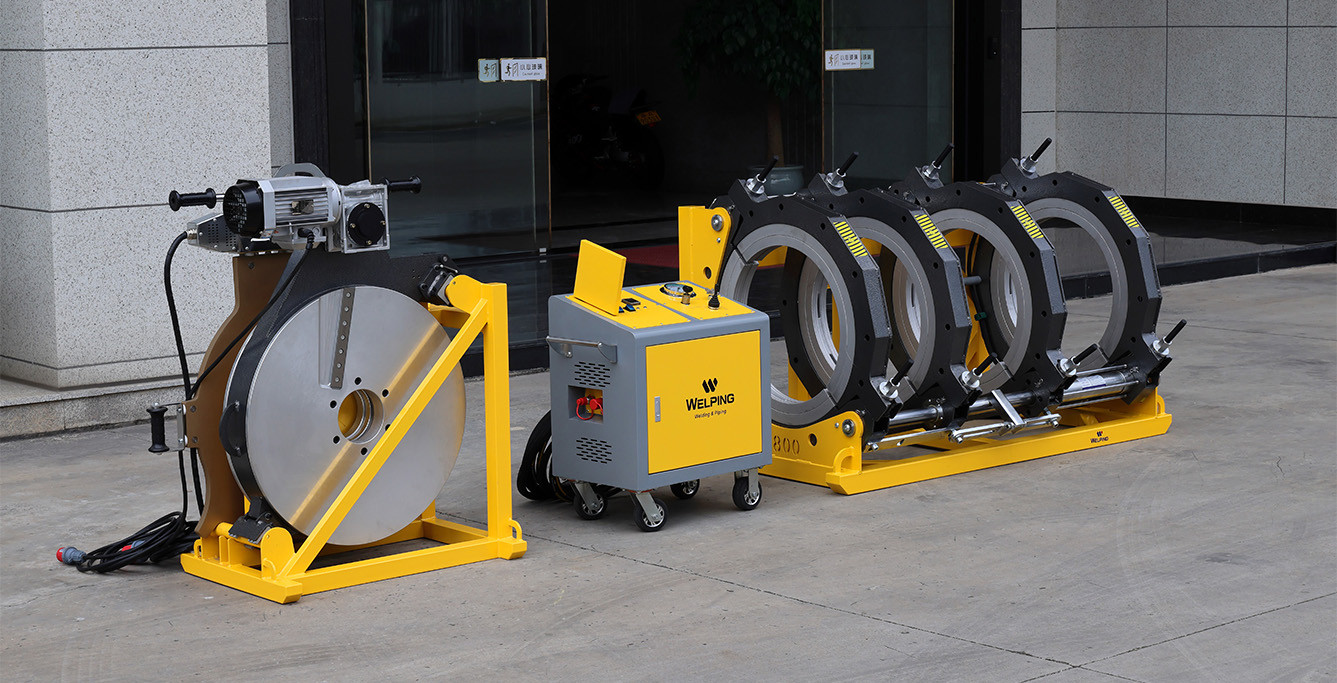
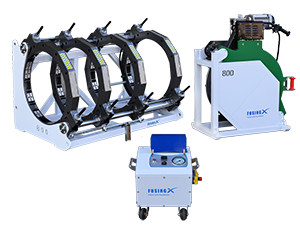
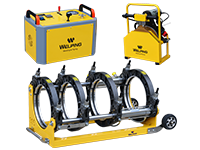
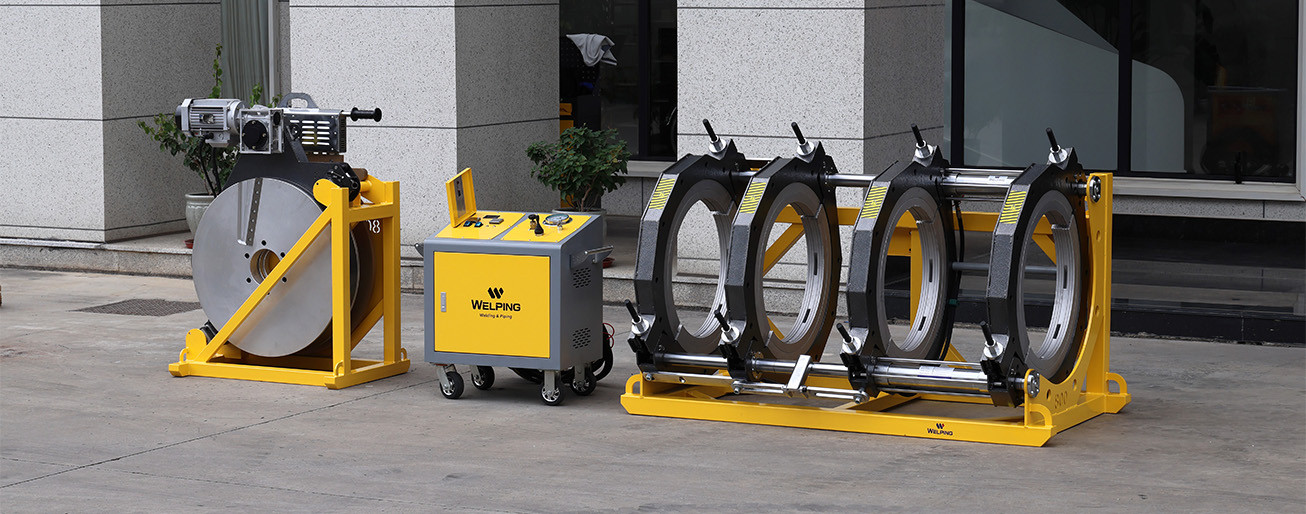
The complete WP800A hydraulic butt fusion system, including the main frame, hydraulic power unit, facing tool, heater plate and storage stands.
Once pipe diameter increases, butt fusion becomes more demanding in ways that go far beyond simply using a larger machine.
The pipe is heavier, the facing area is wider, and the drag resistance of the moving carriage may increase. Clamping, facing, heating and joining all place greater demands on equipment stability. Structural differences that may be barely noticeable on a small machine can become much more important when working with large-diameter pipe.
For that reason, maximum fusion diameter should be treated as only the starting point when selecting a large butt fusion machine. Frame stability, carriage movement, facing performance, heater handling and pressure control all affect how the machine performs once it reaches the jobsite.
Using the WP800A as an example, this article looks at several design areas that deserve close attention in large-diameter PE pipe fusion equipment.
The Frame Carries More Than the Weight of the Pipe
Large-diameter pipe is normally supported by pipe rollers or other external supports, but the fusion frame still carries a significant part of the load.
More importantly, that load is not purely static.
During facing, the pipe ends apply continuous axial force against the facing tool. During bead-up and joining, hydraulic pressure is transferred through the clamps, carriage and frame structure. If the base, clamps or connection points lack sufficient rigidity, even slight movement under load can make alignment and high-low adjustment more difficult.
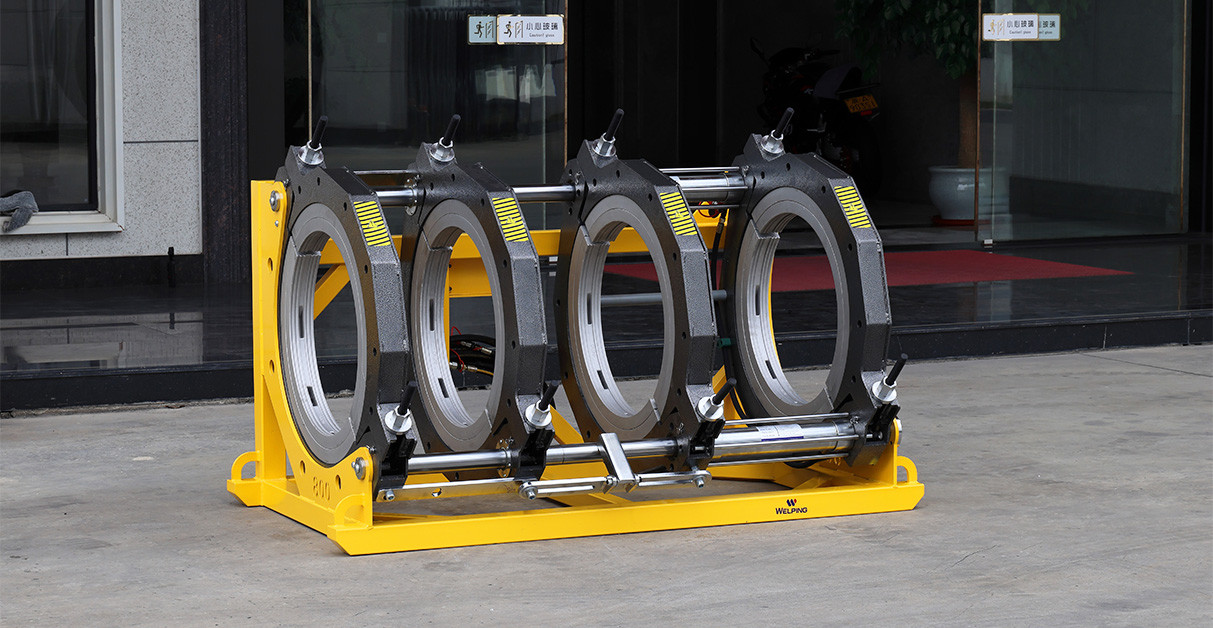
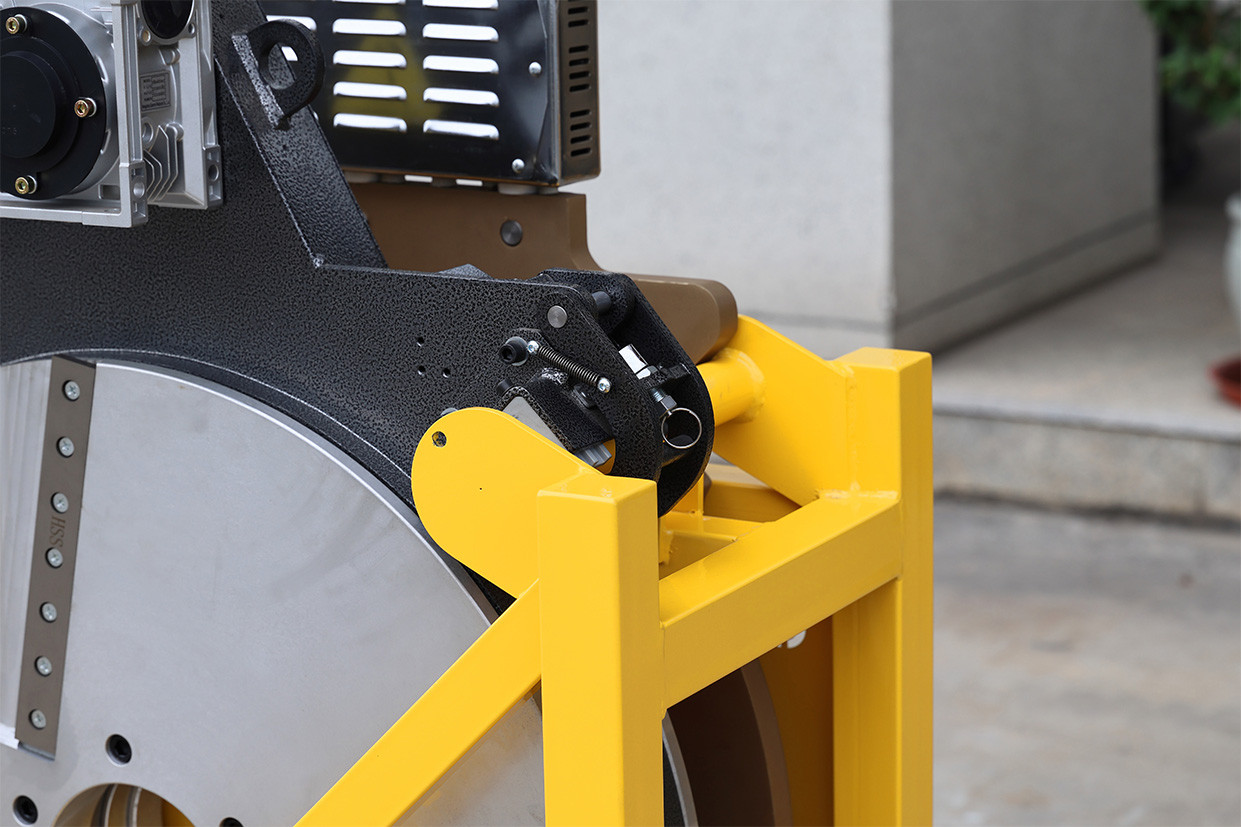
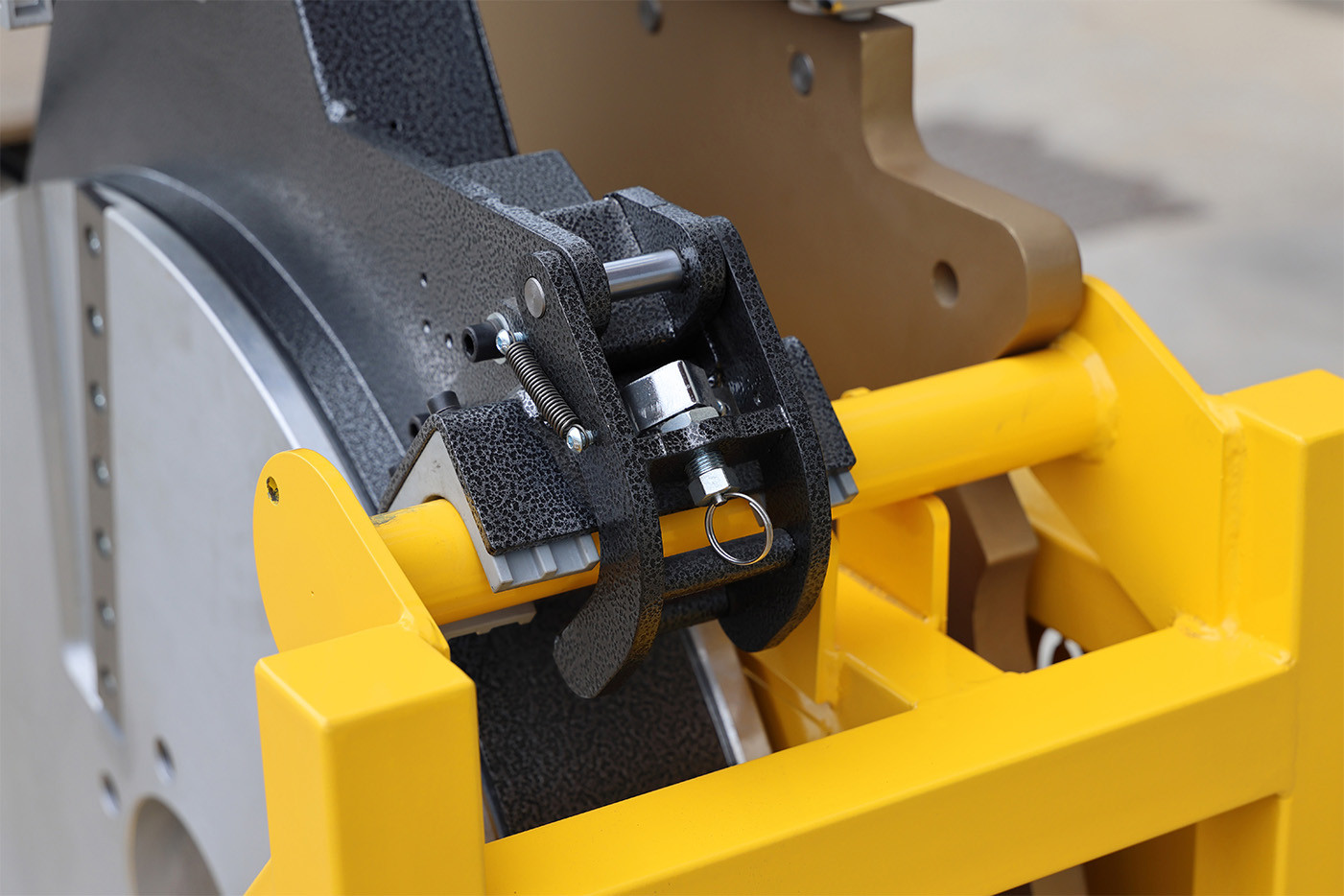
The WP800A uses a four-clamp frame, providing a longer support area on both sides of the joint. This is particularly useful when handling long or heavy pipe sections, as it helps reduce unnecessary movement during facing, heating and joining.
A large fusion frame does not need to look complicated, but it must remain stable through repeated loading and long-term use.
Smooth Carriage Travel Matters More Than Simply Having Enough Force
During a complete butt fusion cycle, the carriage opens and closes several times.
The pipe ends must be separated before inserting the facing tool. After facing, they are brought together again for inspection. The carriage then opens for the heater plate, and once heat soak is complete, it must open and close again within a limited changeover time.
Each movement should follow a consistent path.
If the guide clearance is excessive, or if the moving section becomes unstable under the weight of the pipe, the pipe-end position may shift even after the pipe has been clamped.
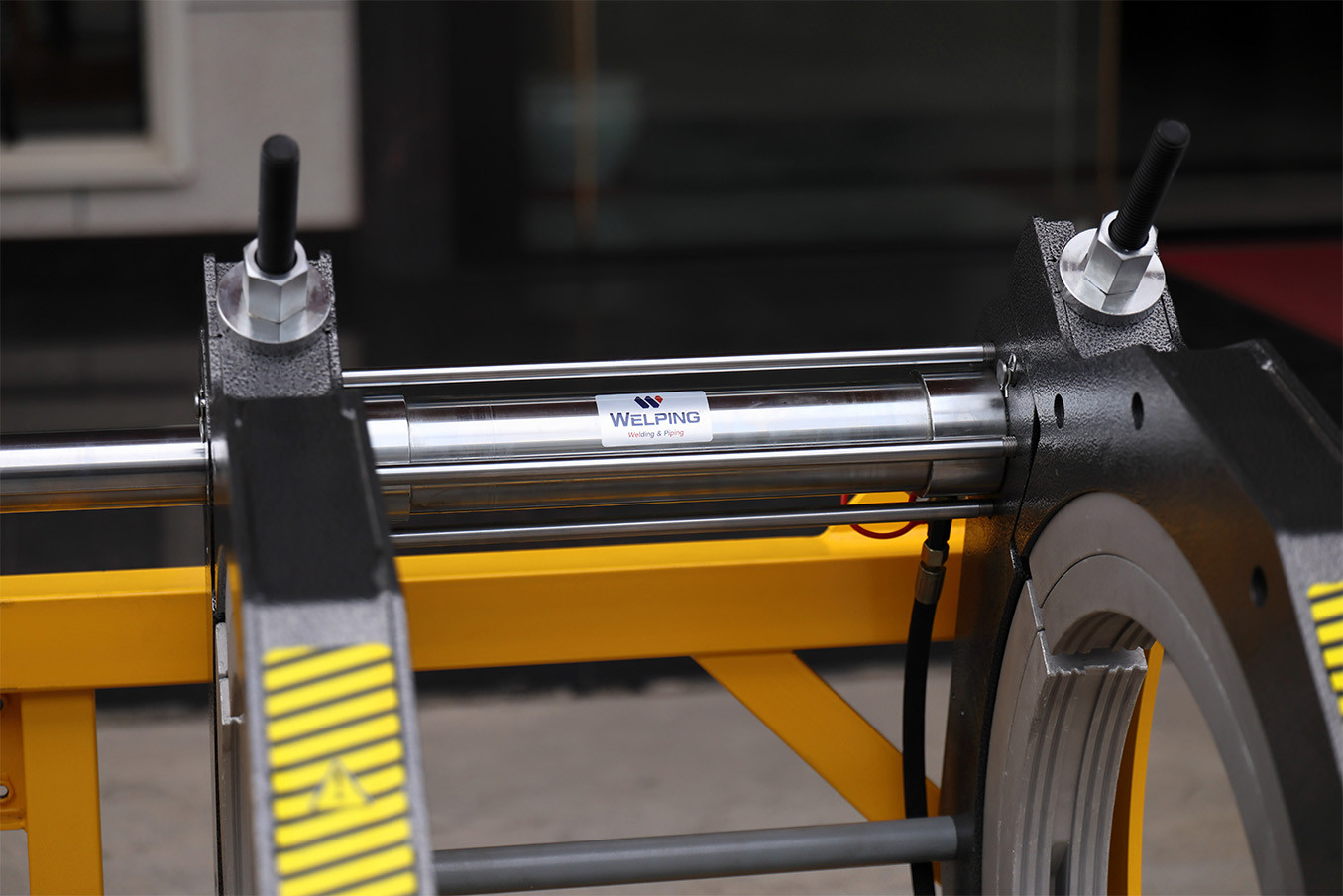
Frame quality therefore cannot be judged by steel thickness alone. The guide arrangement, carriage connections, hydraulic-cylinder position and load direction all influence how the machine behaves in service.
Smooth travel makes operation easier, but it also provides a more stable basis for alignment and reduces the need for repeated adjustment.
The Clamping System Must Hold the Pipe Without Preventing Adjustment
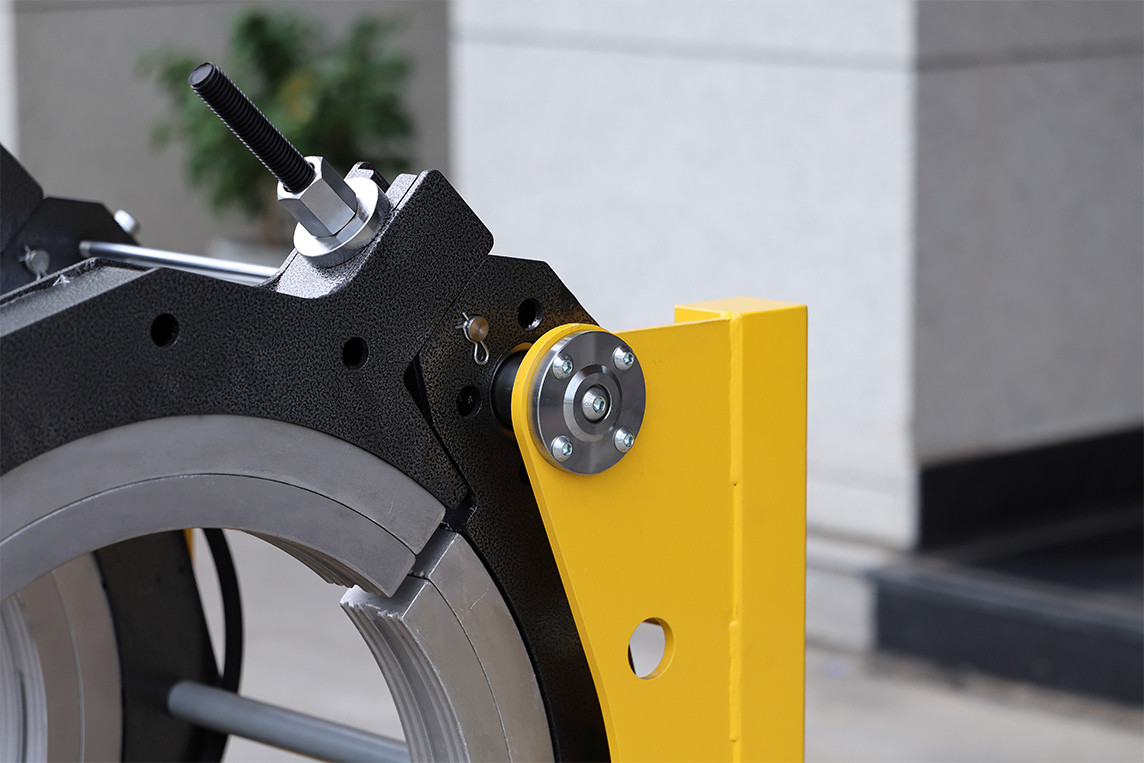
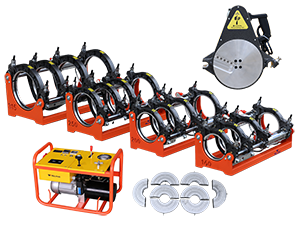
The main clamps provide the load-bearing structure, while reducing inserts allow the machine to accommodate different pipe diameters.
The purpose of the inserts is not simply to apply more clamping force. They should support the pipe evenly inside the main clamps. If the contact area is too concentrated, or if the insert size does not properly match the pipe, positioning can become unstable and unnecessary local pressure may be applied to the pipe wall.
Large-diameter pipe usually requires some adjustment after loading, including height, lateral position and alignment between the two pipe ends. The clamping system must therefore secure the pipe while still allowing the operator to complete these adjustments.
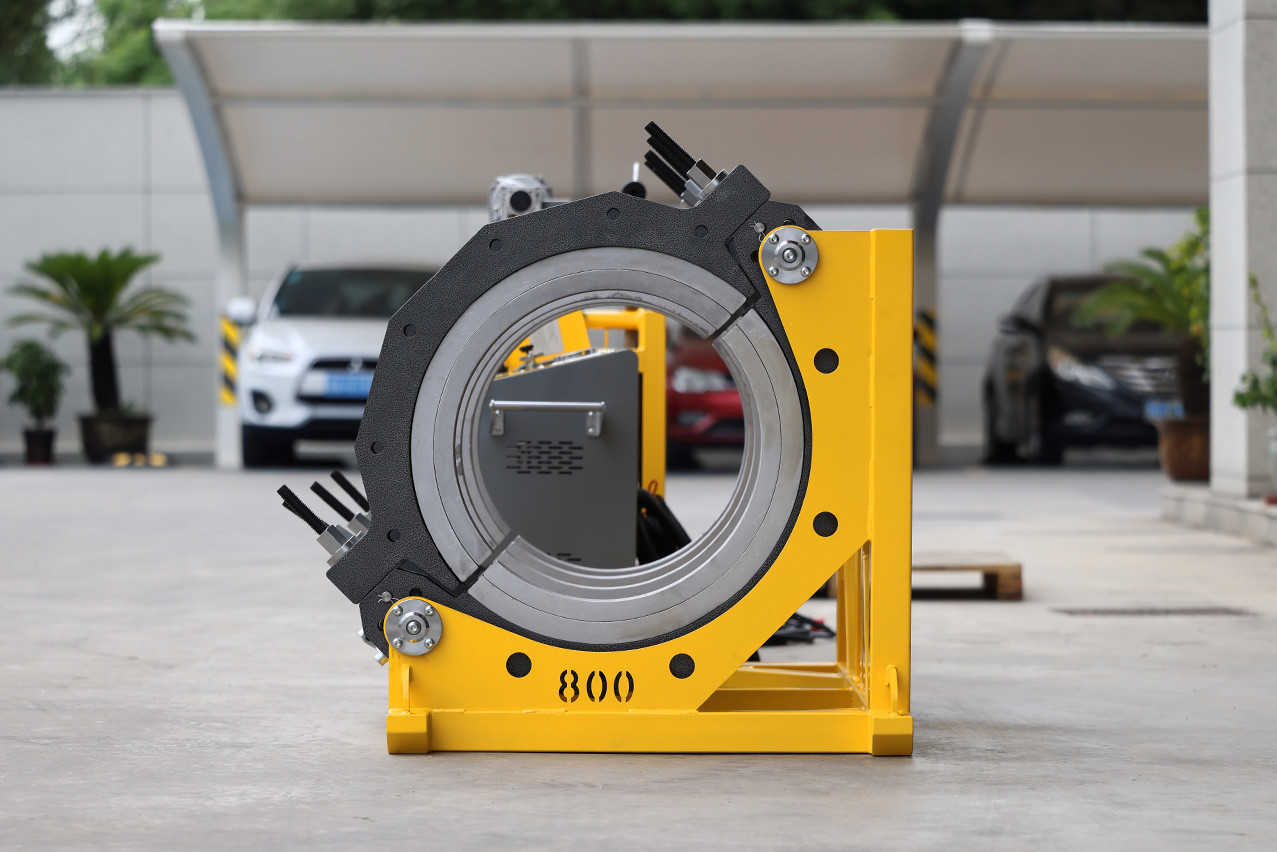
When purchasing a machine, it is important to confirm not only the maximum fusion range but also the pipe sizes that will actually be used on the project and whether the corresponding inserts are included.
The stated fusion range describes what the machine can cover. The insert package determines whether it can be put to work immediately on a particular project.
A Large Facing Tool Cannot Be Judged by Motor Power Alone
Before heating, both pipe ends must be faced to remove oxidation, scratches and surface irregularities.
As pipe diameter increases, the facing tool must process a much larger surface area. Motor power is important, but it is only one part of the overall performance.
The flatness of the facing disc, stability of the tool inside the frame and consistency of cutting on both sides all affect the finished pipe ends. If a large facing tool moves excessively during operation, it may leave uneven cutting marks even when the motor has enough power.
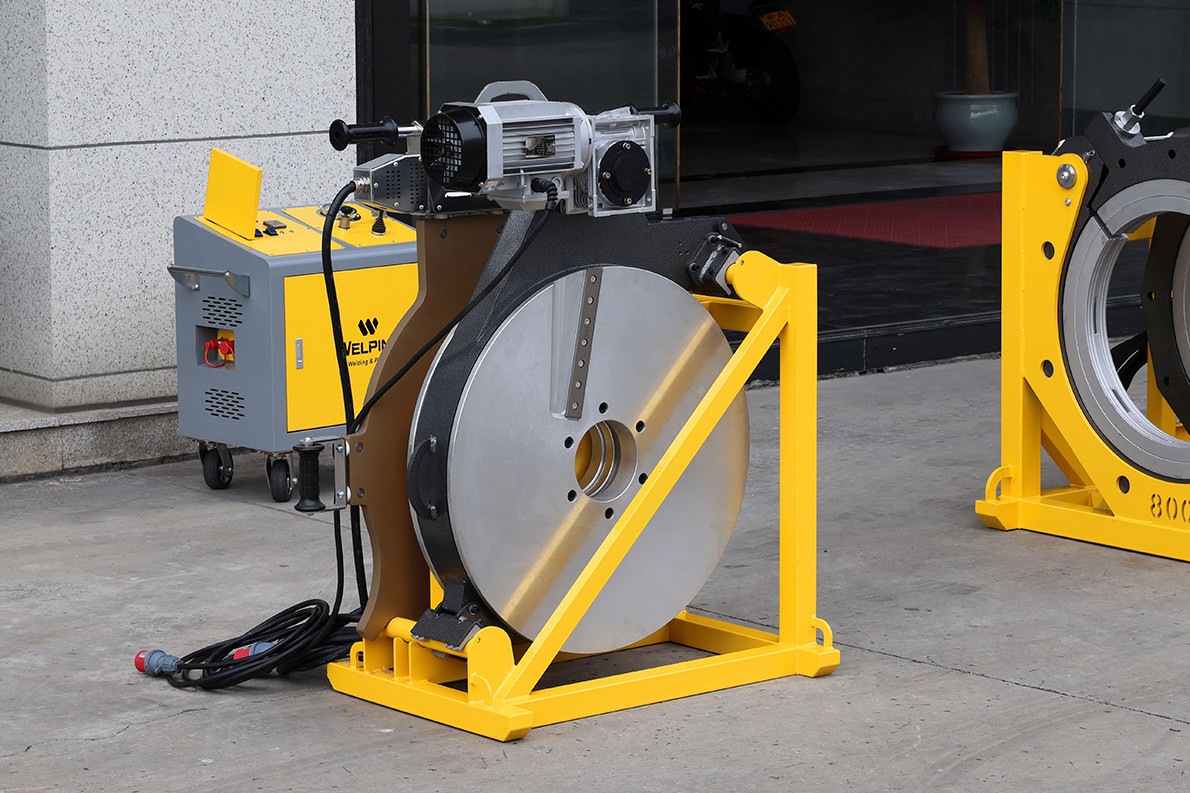
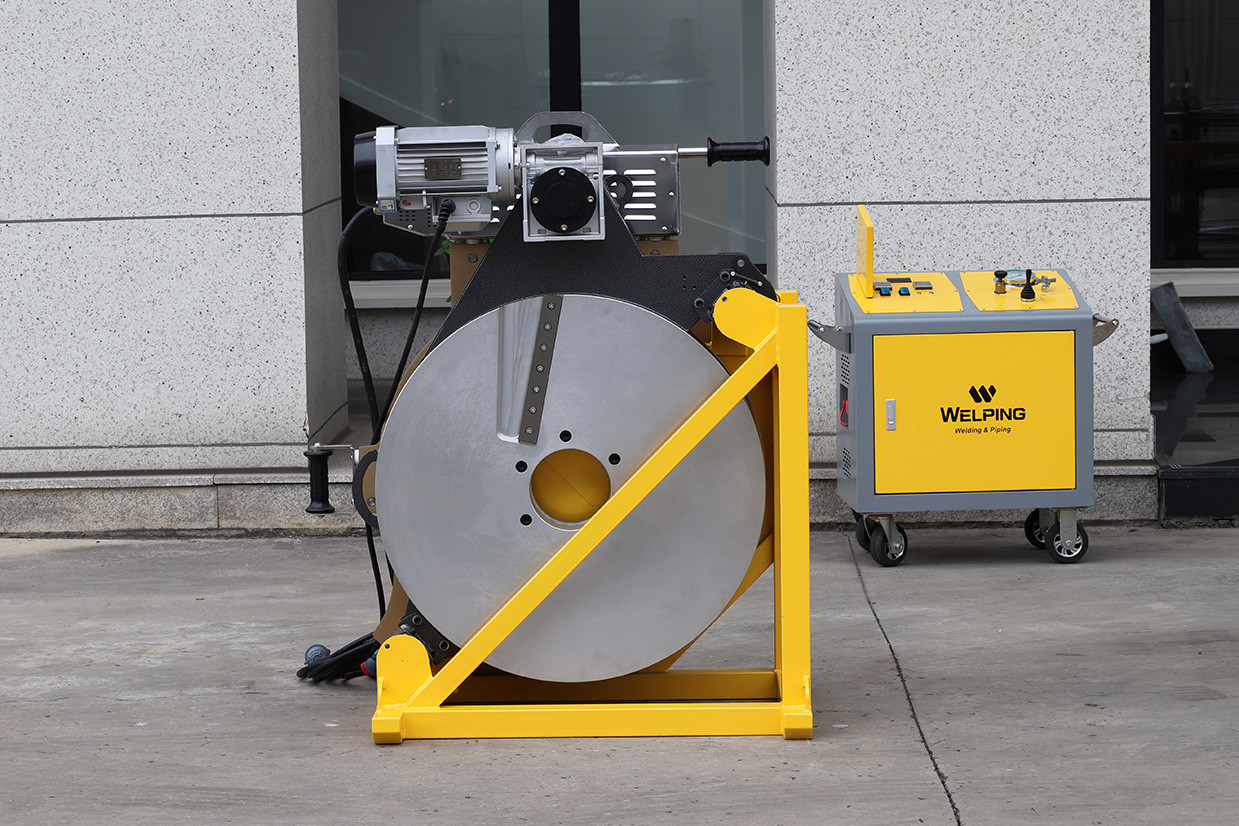
After facing, the operator should still inspect the shavings, check whether the two pipe ends meet continuously and confirm that the high-low misalignment remains within the required limit.
Facing is not simply about removing a layer of material. Its purpose is to create two clean, flat and parallel surfaces that are properly prepared for heating and joining.
Temperature Stability Becomes More Challenging as Heater Size Increases
Large-diameter pipe requires a much wider heating surface, placing greater demands on the heater plate.
The plate must reach the required temperature, but it must also maintain a reasonably stable temperature across the full working area. If different parts of the surface vary too much, the molten layer may not develop evenly around the pipe ends.
The pipe also removes heat continuously once it contacts the heater. A suitable heater plate therefore needs adequate thermal capacity and recovery performance, rather than simply reaching the set temperature while unloaded.
Size and weight also affect heater handling.
At the end of heat soak, the operator must open the carriage, remove the heater and bring the pipe ends together within the specified changeover period. The ease of lifting, the position of the stand and the availability of a stable storage point all affect how smoothly this stage can be completed.
A stand may look like a simple accessory, but on a large machine it influences workflow, heater-surface cleanliness and safe handling around the work area.
The Hydraulic System Must Do More Than Produce High Pressure
Large butt fusion machines use hydraulic power to open and close the carriage and to apply the required force during bead-up, joining and cooling.
However, more pressure does not mean a better fusion joint.
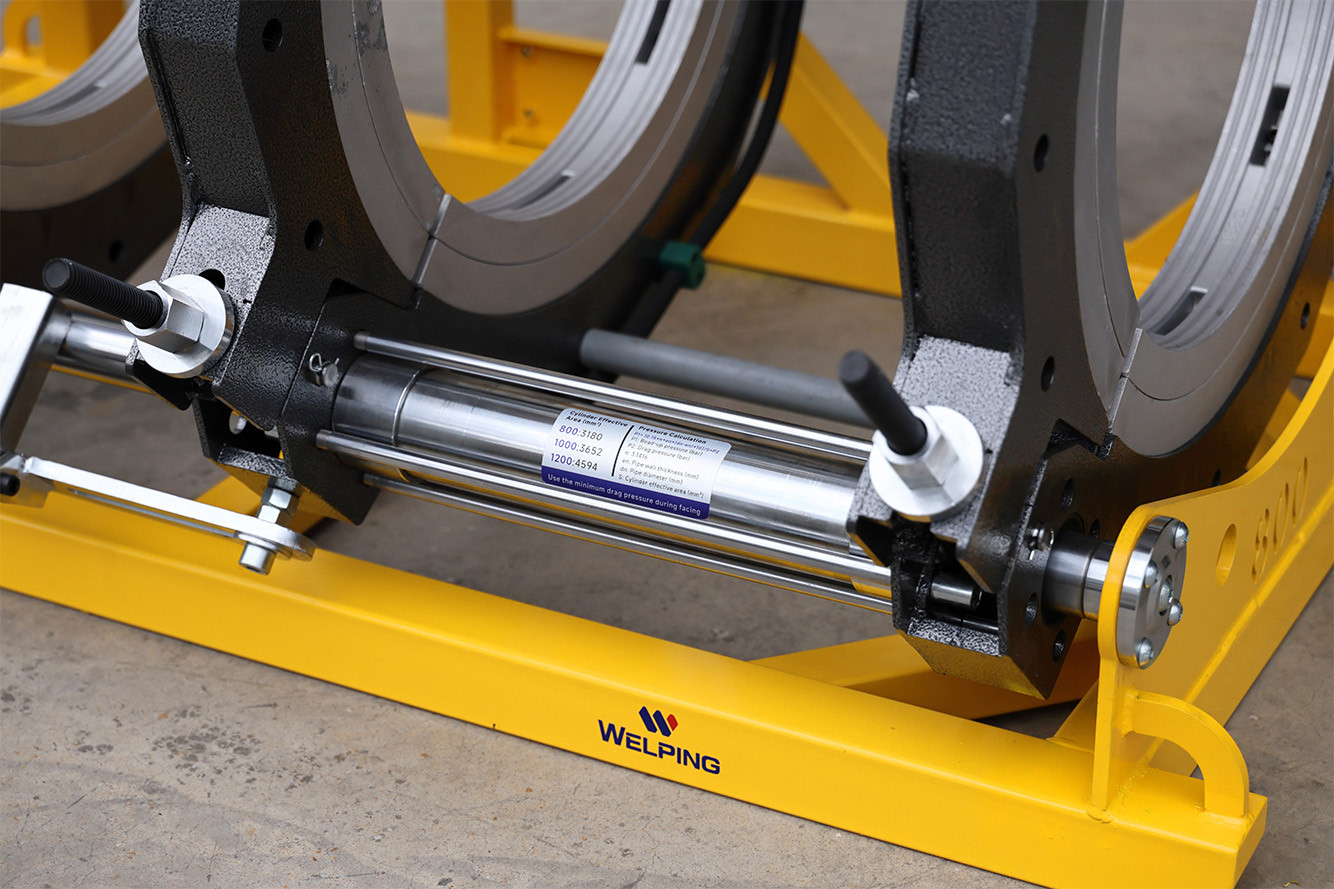
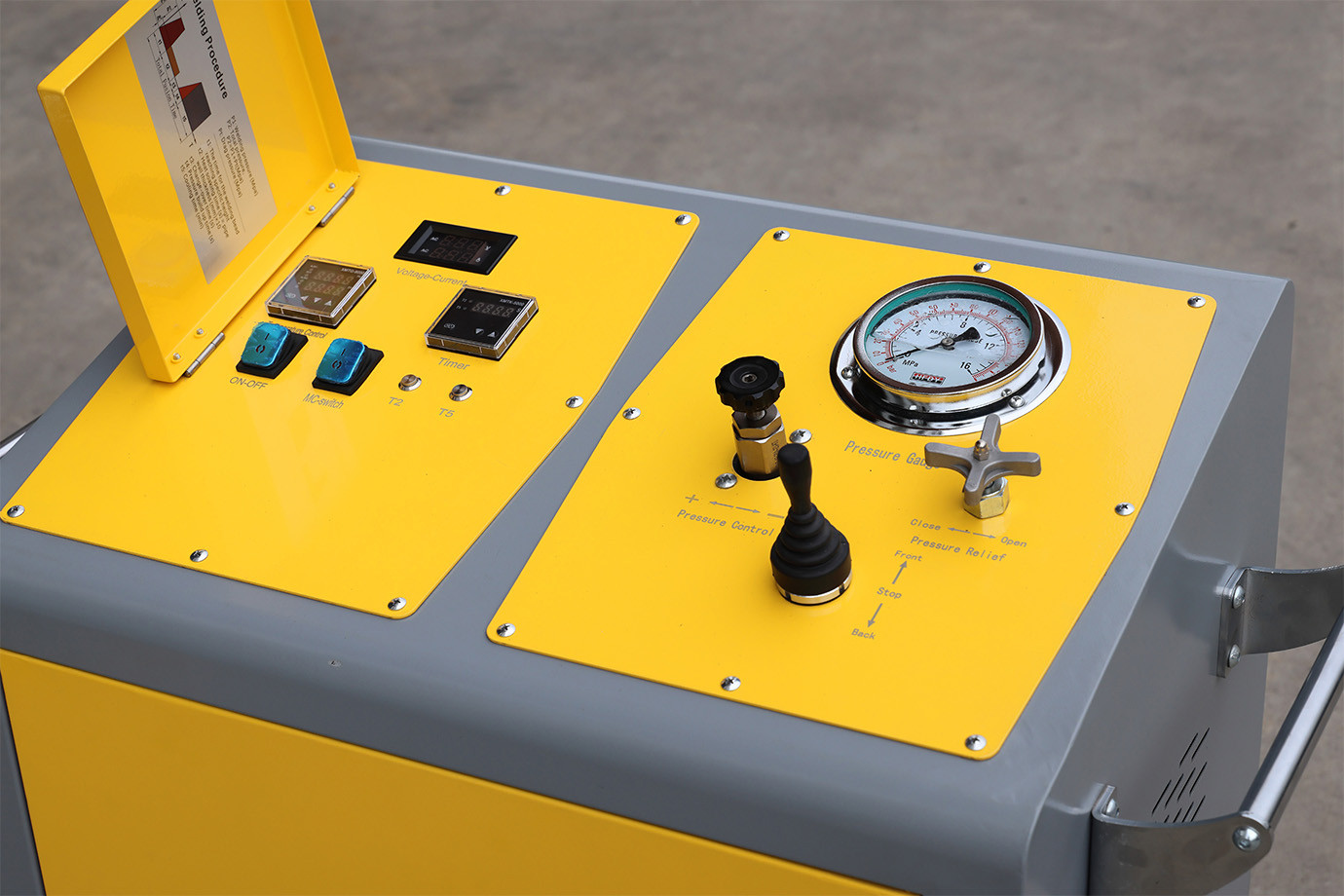
The operator first needs to determine the drag pressure of the carriage and pipe system. The required fusion pressure is then calculated according to the pipe diameter, wall thickness and welding procedure. Pressure requirements also differ between bead-up, heat soak, joining and cooling.
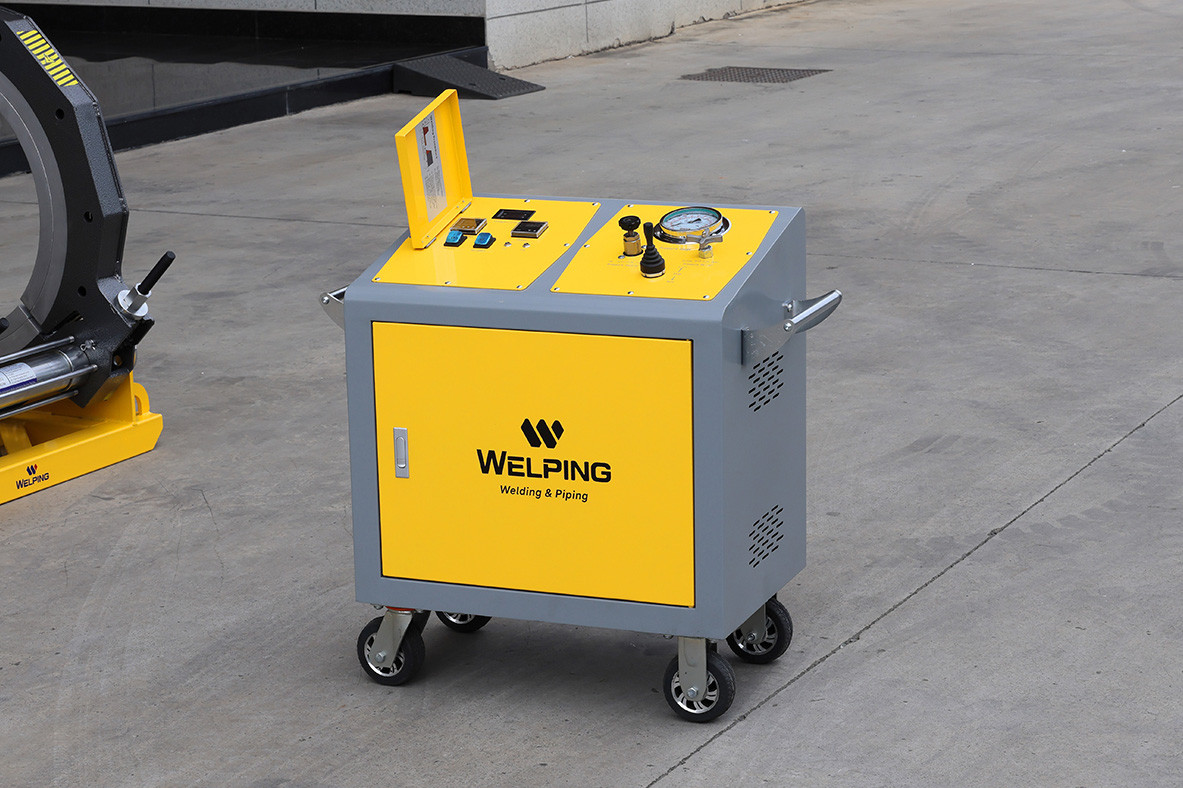
A suitable hydraulic system must therefore provide enough output while still allowing the operator to read and adjust the pressure clearly.
A Modular Layout Only Works When the Components Fit the Workflow
Large butt fusion machines are normally built as separate working units: the main frame, hydraulic power unit, facing tool, heater plate and storage stands.
The value of this layout does not come from simply dividing the machine into several pieces. Each component must have a clear role and fit naturally into the fusion sequence.
Once the pipe is clamped, the facing tool must be easy to place between the pipe ends. After facing, it should be removed and returned to its stand without disrupting the work area. The heater plate is then inserted, removed after heat soak and placed safely before the pipe ends are joined.
If the components are poorly arranged, or if the facing tool and heater do not have clear storage positions, operators may spend unnecessary time moving equipment and finding temporary places for heavy parts.
A well-designed system should support a clear working sequence rather than forcing the crew to improvise around the machine.
Site Mobility Should Be Considered Before the Machine Arrives
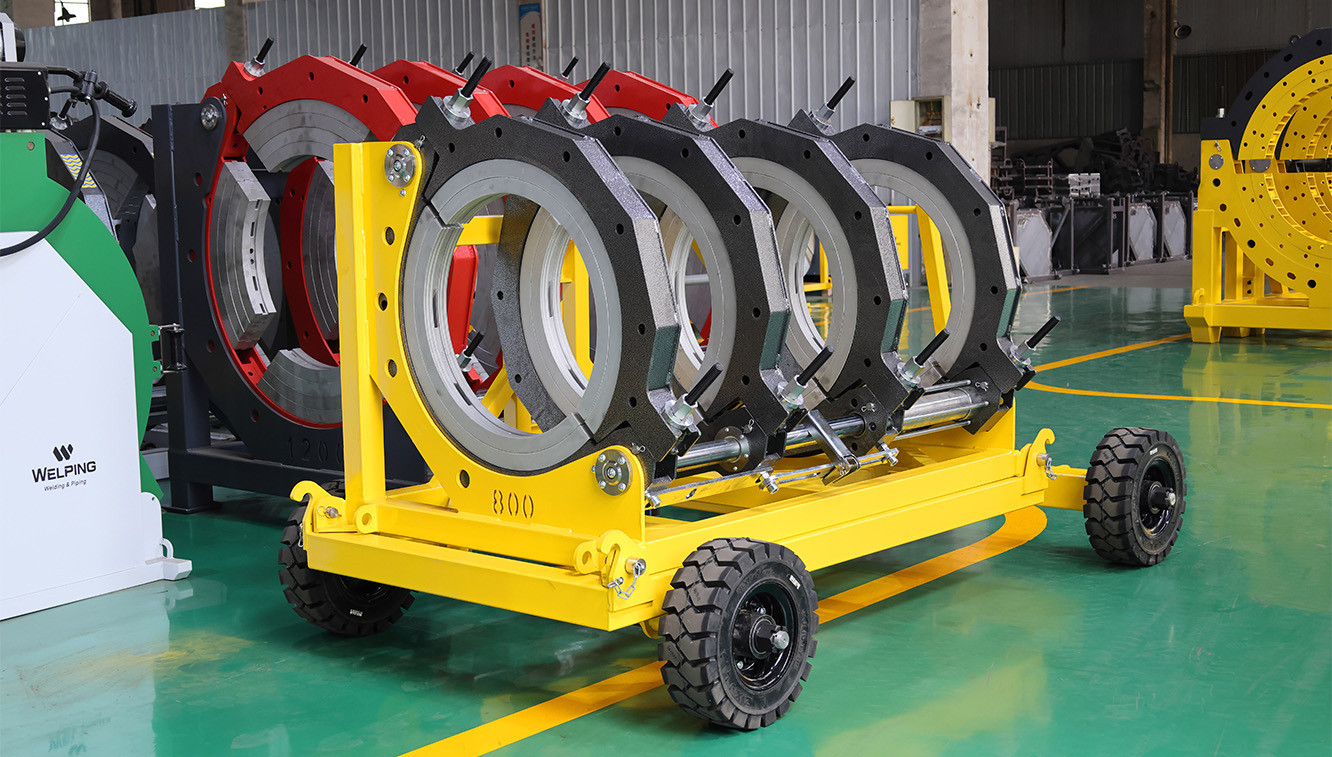
Moving a large fusion machine from the unloading area to the actual joint location can be a major part of the job.
Factory roads, temporary access routes and pipeline work areas differ widely from one project to another. On some jobs, the fusion position also moves forward as the pipeline progresses. If every relocation depends on a crane or forklift, site coordination becomes more complicated.
The WP800A can be supplied with an optional four-wheel trailer frame for short-distance movement on suitable ground. It may be moved manually over short distances or towed slowly by a suitable vehicle when the working area is larger.
Not every project requires a trailer frame, but the method of moving the equipment should ideally be decided during machine selection rather than after delivery.
Maintenance Access Eventually Becomes Part of the Operating Cost
Large equipment is normally expected to serve more than one project, so maintenance becomes increasingly important over time.
The ability to inspect hydraulic lines, replace facing blades, clean the heater surface and obtain seals or electrical components all affects downtime and long-term ownership cost.
More complicated construction does not automatically mean better reliability. In many cases, easy access to the main systems and the ability to replace individual wear parts are more valuable in long-term use.
Before purchasing, it is worth asking several practical questions:
· Which parts are considered routine wear items?
· Can the facing blades be replaced individually?
· What is the recommended solution if the heater coating is damaged?
· Are hydraulic seals and electrical components readily available?
· Can the supplier continue to provide model-specific spare parts?
None of these points changes the maximum fusion diameter, but their importance becomes much clearer after several years of operation.
A Large Butt Fusion Machine Should Work as a Complete System
A large-diameter butt fusion machine should not be judged by one number alone.
The frame must carry the pipe and fusion loads. The carriage must move smoothly. The clamping system must suit the actual pipe sizes. The facing tool must machine large surfaces consistently. The heater must maintain a suitable working condition, and the hydraulic system must allow clear, controlled pressure adjustment.
Equipment layout, mobility and maintenance access also influence how efficiently the machine can be used in real projects.
The value of the WP800A lies not in one isolated feature, but in the way its main systems are arranged around the large-diameter fusion process. The frame, hydraulic unit, facing tool and heater each perform a separate task while working together in the normal sequence.
For major pipeline work, the right machine is not simply one that can produce a joint. It should continue to support stable clamping, facing, heating and joining throughout repeated daily operation, while giving the crew clear control over every stage.