
How to Connect PE Pipes to Iron Pipes and PPR Pipes
Can PE Pipe Be Directly Heat-Fused to PPR or Iron Pipe?
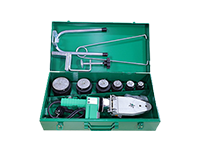
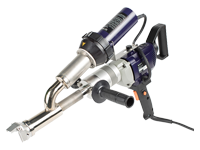
PE and PPR cannot be hot-melted directly. PE has a melting point of approximately 210 °C, while PPR is around 260 °C. Due to different material properties, direct hot-melt welding creates false joints that will definitely leak in service.
PE and PPR Connection Options
1. Brass-Insert Transition Fitting
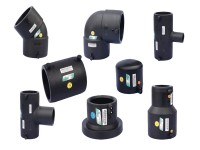
For small-size DN20-DN63 domestic plumbing, use an integrated transition fitting with one end for a PE hot-melt joint, a middle brass insert, and the other end for a PPR hot-melt joint. Apply the PE-specified hot-melt temperature on the PE side and set 260 °C for the PPR side. Weld the two ends separately. Do not force welding at a single temperature.
2. Threaded Brass Transition Fitting
Hot-melt a PE male threaded coupling onto the PE pipe and a PPR female threaded coupling onto the PPR pipe. Assemble the threads with PTFE tape and tighten. Threaded connections carry leakage risk, so avoid embedding them inside walls wherever possible.
3. Flange Connection
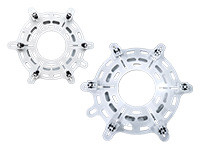
For large-diameter DN63 and above, fit PE flange spool pieces to PE pipes and PPR flange spool pieces to PPR pipes. Tighten with flange gaskets and bolts. This connection is suitable for large-bore pipes and allows disassembly.
4. Push-In Quick Connector
This hot-melt-free push-in type is only for exposed temporary water supply. It is not suitable for long-term buried pressure-bearing service.
PE and Iron Pipe Connection Options
PE pipes cannot be directly hot-melt welded to iron pipes, including galvanized steel pipes and cast-iron pipes.
1. Threaded Steel-Plastic Transition
For small-size DN15-DN40 building inlet branch pipes, use a steel-plastic coupling. One end is socket-hot-melted onto the PE pipe, while the other end has male or female metal threads for connection with the iron pipe. Wrap PTFE tape around the iron-pipe threads and tighten, then perform a standard hot-melt joint at the PE end. This is suitable for indoor low-pressure small branch pipes. Use it with caution for buried installation because threaded joints are prone to corrosion-induced leakage.
2. Flange-Type Steel-Plastic Transition
For DN50 and above, buried engineering pipelines, and main pipelines, butt-heat-fuse a PE flange spool piece (stub end) with a loose backing flange onto the PE pipe. Attach a metal flange plate to the iron-pipe end by welding or threading. Place a rubber gasket between the two flanges and fasten them with bolts. This connection resists ground settlement, has a high pressure-bearing capacity, and can be disassembled. It is a mainstream solution for water-supply and gas PE-pipe projects.
3. Clamp-Type Quick Coupling
This banded mechanical joint requires no hot-melting. It is intended for emergency repair and temporary pipelines only, not for long-term main pipelines.