
How to Choose a 1200mm Butt Fusion Welding Machine for Large HDPE Pipes
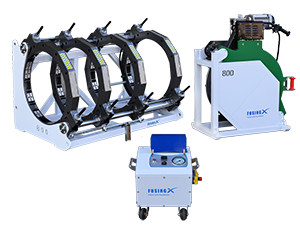
A 1200mm butt fusion welding machine is usually used for large PE and HDPE pipe projects, such as water supply, drainage, mining pipelines, and industrial piping systems.
Compared with smaller welding machines, this type of machine has to handle larger pipe sizes, heavier pipe sections, and more demanding jobsite conditions. Because of this, choosing a 1200mm machine should not be based only on the maximum welding size.
The size range is important, but it is only the first point to check. Frame strength, pipe clamping, facer performance, heating plate stability, hydraulic control, and manufacturer support are all important factors.
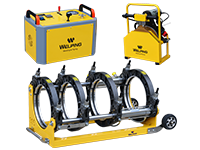
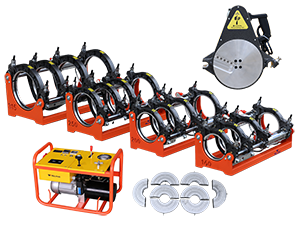
A good 1200mm butt fusion machine should be considered as a complete working system, not just a large machine frame.
1. Check the Real Working Range
When people talk about a 1200mm butt fusion machine, they usually focus on the maximum welding size. However, in real projects, the machine may not only be used for 1200mm pipes.
Many large pipe projects also involve sizes such as 630mm, 710mm, 800mm, 900mm, 1000mm, and 1100mm. So before choosing a machine, it is important to check the full working range.
You should confirm:
· Whether the machine covers the pipe sizes commonly used in your projects;
· Whether the right reducer inserts are included;
· Whether changing between different pipe sizes is convenient;
· Whether the inserts provide stable support for large pipes;
· Whether common sizes are standard configuration or optional items.
For contractors, quick and easy size changes can help improve jobsite efficiency. For distributors, a wider and more practical configuration also makes the machine easier to match with different customer needs.
So instead of only asking, “What is the maximum welding size?”, it is better to ask, “Does this machine cover the sizes I actually use most often?”
2. Frame Strength and Structural Stability
Large HDPE pipes are heavy. During welding, the machine needs to clamp, move, align, face, heat, change over, and hold pressure on the pipe ends. These steps all place load on the frame, guide rods, clamps, and hydraulic system.
If the frame is not strong enough, the machine may feel unstable during long-term use. Pipe movement may become less smooth, alignment may become more difficult, and the overall operation may be affected.
When choosing a 1200mm butt fusion welding machine, it is worth checking:
· Whether the frame is strong enough for heavy pipe work;
· Whether the guide rods and clamps are suitable for large-diameter pipes;
· Whether the key parts are machined with good accuracy;
· Whether the whole machine is assembled firmly;
· Whether the structure can remain stable under regular heavy-duty use.
A large machine is not simply a smaller machine made bigger. As pipe size increases, the structure must be designed for heavier loads and more demanding working conditions.
For large-diameter pipe welding, a stable frame is the foundation of the whole process.
3. Pipe Holding and Clamping Design
Butt fusion welding is not only about heating and joining pipe ends. Before that, the pipe must be held firmly and steadily.
This is especially important for large-diameter pipes. Because the pipe is heavier, it is easier for unwanted movement to happen during alignment, movement, and pressure holding.
A good clamping system should provide enough contact area and support. It should not rely only on strong local pressure. Wider inserts can help support the pipe more evenly and reduce local stress on the pipe surface.
Anti-slip design is also worth checking. Anti-slip pads can increase the contact area and friction between the pipe and the clamp. This helps reduce the risk of slipping during movement, alignment, and pressure holding.
In some projects, the pipe may be slightly smaller than the standard size, or it may have minor ovality or dimensional variation. In this case, a clamping design with adjustment ability can make the machine easier to use on site.
Good clamping does not only mean holding the pipe tightly. It means holding the pipe steadily throughout the whole welding process.
4. Facer Performance and Pipe End Preparation
Pipe end facing is one of the key steps before butt fusion welding. A clean and flat pipe end helps with later alignment, heating, and joint preparation.
For large-diameter pipes, the facer has to work under higher load. This means its transmission structure, strength, and locking method become very important.
When selecting a 1200mm butt fusion machine, do not only check the main frame. The facer also deserves close attention.
You can check:
· Whether the facer transmission is stable;
· Whether it has enough strength for large pipe facing;
· Whether the transmission structure is less likely to loosen after long-term use;
· Whether the facer is easy to install and lock;
· Whether the facing process runs smoothly.
For large machines, a weak or unstable facer can affect pipe end preparation. This may make later alignment and welding more difficult.
A reinforced chain drive, self-tensioning structure, and reliable locking device are all useful details. They may not look very special at first, but they can make a clear difference in long-term use.
The facer is not just a tool for trimming pipe ends. It prepares the foundation for the whole welding process.
5. Heating Plate Stability and Temperature Uniformity
The heating plate is one of the most important parts of a butt fusion welding machine. For PE and HDPE pipe welding, the set temperature matters, but stable and even heat transfer is just as important.
For large-diameter welding, the heating plate is much bigger. If the temperature is not even across the heating surface, the pipe ends may not be heated in the same condition.
When choosing a machine, it is worth checking:
· Whether the heating plate casting is thick and stable;
· Whether the coating quality is reliable;
· Whether the heating elements are suitable for long-term use;
· Whether temperature inspection is carried out before delivery;
· Whether the heating plate can maintain good temperature uniformity across a large surface.
Some customers only look at the temperature controller. But in real use, the structure, coating, heating elements, and factory inspection process also matter.
A good heating plate should not only reach the set temperature. It should also provide stable and even heat transfer during the welding process.
6. Hydraulic System and Operation Control
A 1200mm butt fusion welding machine needs a stable hydraulic system. Pipe movement, dragging pressure, alignment, and pressure holding all depend on hydraulic control.
In real jobsite use, the hydraulic system is not only about having enough pressure. More important questions include:
· Does the pipe move smoothly?
· Is the facer movement easy to control?
· Is pressure building clear and stable?
· Can the machine hold pressure reliably?
· Is the operation easy for the user?
For large-diameter pipe welding, the operator often needs to observe the joint area closely. This includes pipe alignment, facing quality, heating changeover, and pressure holding.
If the operator can only stand beside the hydraulic unit, observation may not always be convenient. This is why flexible control, such as remote operation, can be very useful on large machines.
With a remote control, the operator can stand in a better position to observe the welding area and control key movements more easily.
For a large machine, operation convenience is not a small extra feature. It can directly affect jobsite efficiency and working experience.
7. Manufacturer Capability and Long-Term Support
A 1200mm butt fusion welding machine is a heavy-duty product. When choosing one, it is not enough to look only at photos, specifications, or a single quotation.
The manufacturer behind the machine is also important.
Large machines involve many production steps, including frame machining, clamp manufacturing, hydraulic system assembly, heating plate inspection, and facer adjustment. If the manufacturer does not have stable production and inspection processes, product consistency may be affected.
Before buying, it is useful to check:
· Whether the manufacturer has experience with large-diameter machines;
· Whether the factory has stable machining and assembly processes;
· Whether common spare parts can be supplied;
· Whether different configurations are available;
· Whether technical support can be provided;
· Whether the supplier can support long-term delivery.
For contractors, machine reliability is important. For distributors, stable supply, spare parts, and after-sales support are also important.
A large machine is not just a one-time purchase. Future use, maintenance, spare parts, and service should also be considered.
8. Choose the Machine as a Complete Working System
When choosing a 1200mm butt fusion welding machine, the maximum welding size is only the starting point.
A reliable large-diameter machine should perform well in several areas:
· Practical working range;
· Strong and stable frame structure;
· Reliable pipe clamping;
· Stable pipe end facing;
· Heating plate stability;
· Smooth hydraulic control;
· Convenient operation;
· Long-term manufacturer support.
These factors work together. They decide whether the machine is stable, easy to use, and reliable in real jobsite conditions.
If your project involves large PE or HDPE pipe welding, do not choose a 1200mm butt fusion machine only by price or maximum size. Frame design, clamping, facer performance, heating plate quality, hydraulic control, and supplier capability should all be considered.
For more details about specifications, configuration options, and product photos, you can visit the FX1200 butt fusion welding machine product page.