

Home / Maintenance and Care Manual
Welping Machine Maintenance and Care Manual
1. Heating Plate Maintenance and Care
I. Daily Use
1. Before use, inspect the power cord, plug, and temperature controller for damage or looseness.
2. Never operate without load or dry; avoid overheating or exceeding rated power.
3. Absolutely forbidden: Touch the hot plate surface with bare hands to prevent burns and contamination.
4. After work, turn off heating first; allow natural cooling to room temperature before disconnecting power. (Series C can be directly powered off.)
5. After heating, return the heating plate to its support rack.
6. Place the used heating plate in a location that does not obstruct vehicle or pedestrian traffic, and mark the area with warning signs indicating hazards.
II. Cleaning and Maintenance
1. Always disconnect power before cleaning.
2. Wipe surface stains with a dry or slightly damp cloth; do not splash water or immerse.
3. Ensure no welding residue remains on the heating plate surface.
4. Keep ventilation openings and junction boxes dry, dust-free, and free of debris.
III. Storage and Long-Term Non-Use
1. Store in a dry, well-ventilated, dust-free environment; avoid moisture.
2. If unused for long periods, periodically power on for a few minutes to prevent moisture buildup.
3. Neatly coil the power cord; avoid crushing or sharp bending.
IV. Safety Precautions
1.If abnormal noise, odor, smoke, or temperature control failure occurs, stop use immediately and seek repair.
2. Do not disassemble or repair heating elements, thermostats, or internal wiring yourself.
3. Ensure reliable grounding; avoid use in flammable or explosive environments.
4. Information Required for Repair Reports: ① Machine model. ② Problem description. ③ Issues encountered during operation (avoid tampering with internal wiring; consult a technician before proceeding). ④ Record a video after the issue occurs, clearly showing instrument readings and heating plate status (e.g., overheating, underheating, no temperature display).
2. Milling Cutter Maintenance
I. Before Use
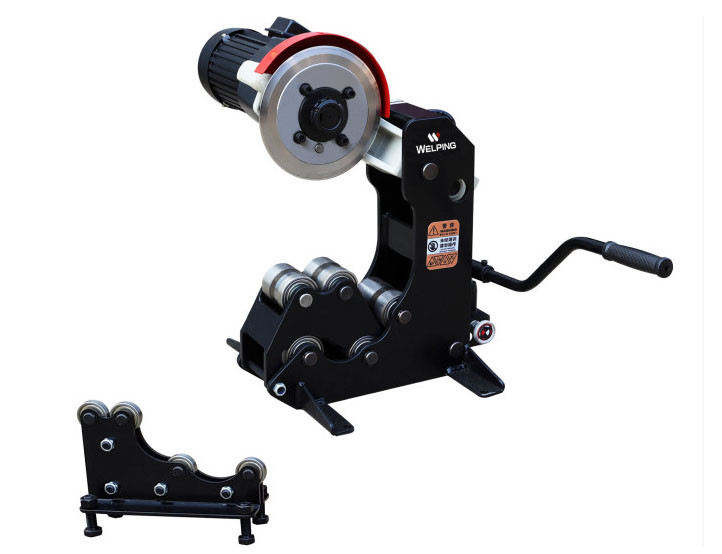
1. Inspect the cutter edge for chipping, wear, or cracks; replace if necessary. (Original Welping blades are double-sided and can be flipped for reuse.)
2. Confirm the blade is securely installed.
3. Do not force heavy cuts; match cutting parameters to material type.
4. Check power cord and plug for damage or looseness before use.
5. Never operate without load or dry; avoid overheating or exceeding rated power.
6. Absolutely forbidden: Touch the milling cutter directly with hands to prevent cuts.
II. During Use
1. Only remove cut-off waste material after the cutter has completely stopped rotating.
2. promptly remove debris to prevent accumulation.
3. Use lubricants appropriately to extend service life.
4.Start the cutter rotating before bringing the pipe into contact; this ensures smooth cutting edges and prolongs motor life. (For hydraulic machines, calculate or estimate cutting pressure during pushing; avoid excessive pressure that causes jamming.)
5. If vibration, abnormal noise, or uneven cutting occurs, stop immediately and inspect.
III. After Use
1. Thoroughly clean plastic shavings from the blade and cutter disc.
2. Place used blades in the designated carrying basket; do not discard randomly to avoid damage to blades or frame corners.
3. Turn off power after work; only organize tools after the cutter has fully stopped.
IV. Storage and Rust Prevention
1. Store in a dry, ventilated area; apply anti-rust oil or use anti-rust packaging.
2. Use a dedicated carrying basket to prevent dropping or crushing.
3. For long-term storage, perform regular inspections, reapply rust protection, and replace worn parts as needed.
3. Hydraulic Station Maintenance and Care
I. Daily Checks (Required Every Shift)
1. Check oil level is within normal range; refill if low.
2. Monitor oil temperature: normal operating range is 35–55°C; must not exceed 60°C.
3. Listen for abnormal noise, vibration, or unusual sounds.
4. Check pressure gauge for stable and normal readings.
5. Inspect for leaks at hoses, fittings, cylinders, pumps, and valves.
II. Hydraulic Oil Maintenance
1. Use only 46# anti-wear hydraulic oil; do not mix different grades.
2. Keep oil clean; strictly prevent water, impurities, or dust contamination.
III. Key Component Maintenance
1. Oil Tank: Open lid periodically to inspect and clean sludge and debris from the bottom.
2. Hose Fittings: Tighten loose connections promptly; replace aged hoses in advance.
3. Hydraulic Pump & Motor: Monitor temperature and sound; shut down immediately if abnormalities occur.
IV. Cooling and Sealing
1. Keep coolers clean and well-ventilated; ensure cooling fins are free of dust blockage.
2. Replace aging seals and oil seals promptly if leaking.
3. Maintain a clean environment to prevent dust and moisture from entering the hydraulic system.
V. Safety Precautions
1. Depressurize before disconnecting quick-release fittings.
2. Do not exceed pressure limits, overload, or arbitrarily increase system pressure.
3. If abnormal noise, severe overheating, or major oil leaks occur, stop immediately and seek repair.
4. Generator and Extension Cord Instructions
a. Generator
The generator’s rated power must be greater than or equal to the equipment’s required power. Using a lower-power generator may damage components.
Selection Guideline:
Generator Rated Power ≈ 2–3 × Total Equipment Power
b. Extension Cords
Equipment operates at 380V ±10% (or 220V ±10%), 50Hz.
If using extension cords, ensure they have sufficient conductor cross-sectional area.
1. Single-phase 220V
2. Three-phase 380V
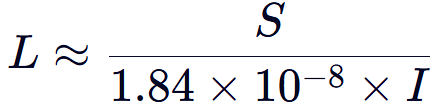
Key Note:
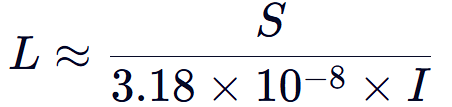
The calculated length is the maximum theoretical distance. For on-site/construction use, reserve a 20% safety margin (e.g., if calculation yields 50 meters, actual usage should be ≤40 meters) to account for ambient temperature and connection losses.
| Parameter | Symbol | Unit | Value / Calculation Notes | |||
| Conductor Cross-Sectional Area | S | mm² | Round up the calculated result (e.g., 3.2 → 4, 5.8 → 6) | |||
| Extension Cord Length | L | m (meters) | Actual laid length of extension cord (single-core wire length) | |||
| Equipment Current | I | A (Amperes) | Rated current of equipment (see quick conversion formula below) | |||
Maintenance Schedule
The general inspection items are as follows:
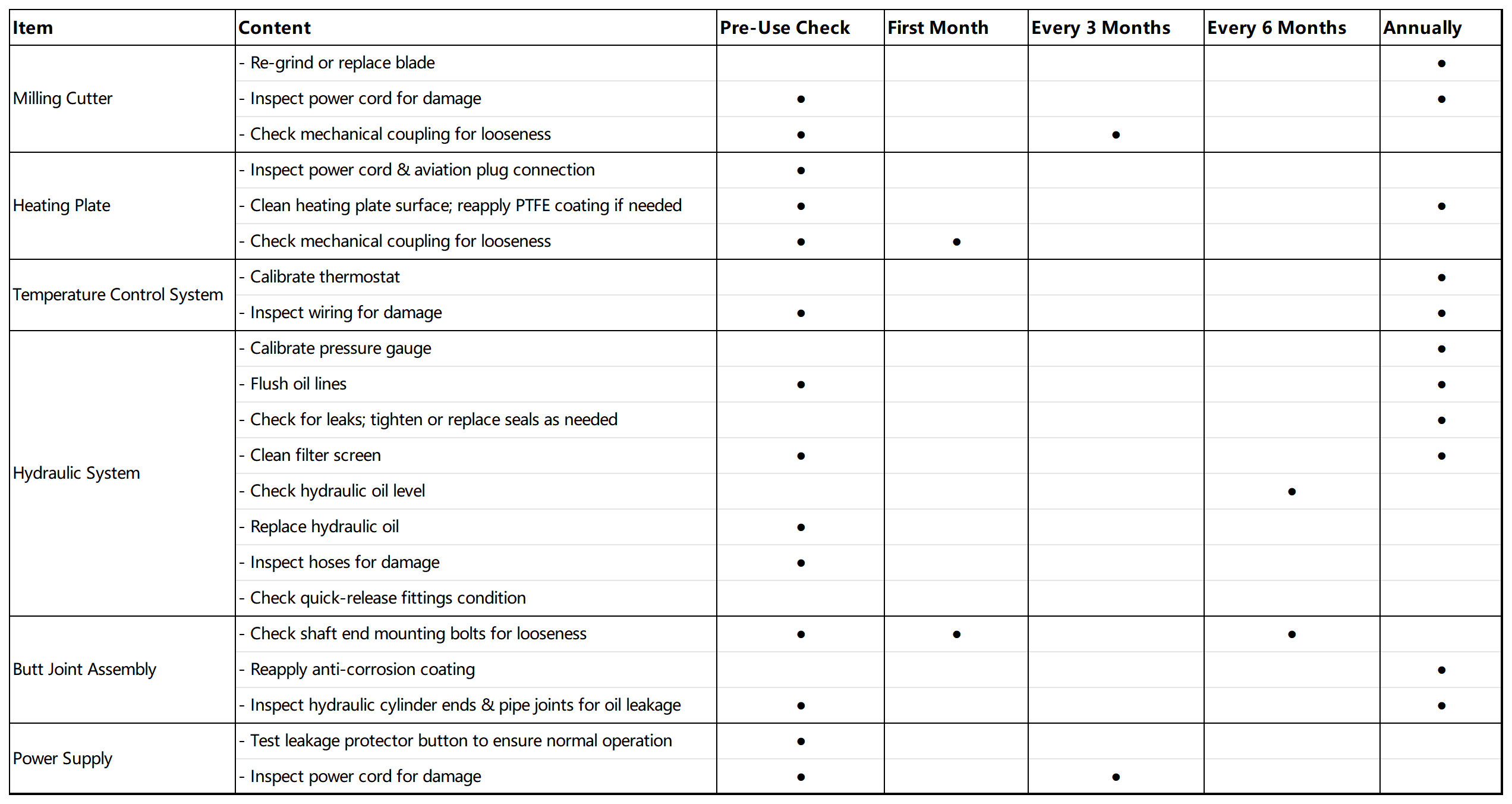
Note: ● — Indicates the corresponding maintenance time for the item.